
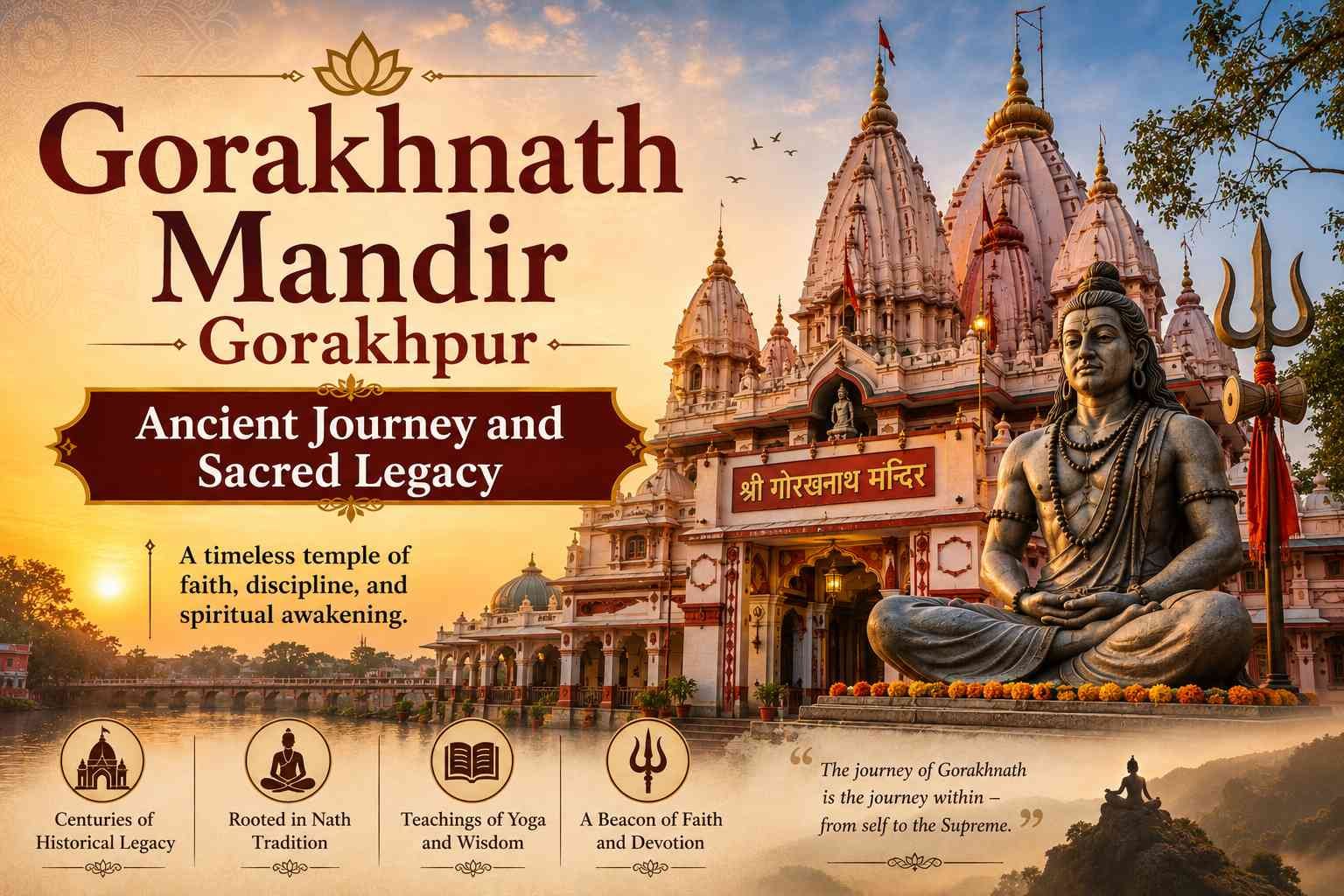
The shared identity of Gorakhpur and Gorakhnath Mandir represents a vibrant intersection of ancient history, geographical significance, deep-rooted mythology, and living spiritual heritage in Eastern Uttar Pradesh. Named directly after the revered medieval saint Mahayogi Guru Gorakhnath, the city serves as the sacred heartland of the Nath Sampradaya order. You can discover more on our home page or explore our post on Gorakhnath Mandir Gorakhpur historical origins and legacy. Every year, millions of pilgrims, historians, and travelers visit Gorakhpur to experience the unique blend of ancient monastic traditions, architectural grandeur, and vibrant local culture preserved at Gorakhnath Mandir.
http://googleusercontent.com/image_collection/image_retrieval/4931369192705980230_0
Geographical Landscape of Gorakhpur
Situated in the fertile Terai plains of Northern India, Gorakhpur is geographically positioned along the banks of the Rapti and Rohini rivers. The region’s lush natural terrain and close proximity to Nepal historically made it a strategic stopover for trade, cultural exchange, and spiritual retreats across South Asia.
Historical Evolution of Gorakhpur City
In ancient times, the land comprising modern Gorakhpur formed a key part of the Kosala kingdom during the Mahajanapada era, closely linked to the solar dynasty of King Rama. Over successive centuries, the region flourished under the Maurya, Shunga, Kushan, Gupta, and Harsha empires before evolving into a prominent cultural center of medieval India.
Mythological Tapestry and Mahabharata Connections
Rich mythological lore enriches the spiritual foundation of Gorakhpur and Gorakhnath Mandir across different eras. Epic traditions connect the temple grounds to the Mahabharata, recounting how the Pandava brothers visited the region during their exile to seek spiritual counsel from Guru Gorakhnath. To read more about these fascinating historical periods, explore our guide on the history of Gorakhnath Mandir Gorakhpur from antiquity to modern era. These sacred stories continue to inspire profound faith among visiting devotees.
The Sacred Legend of Bhim Sarovar
According to local tradition, the powerful Prince Bhima excavated a large water body within the temple premises during his travels, which became known as Bhim Sarovar. Today, this holy lake remains a central focus for pilgrims who perform ritual ablutions before entering the main shrine.
The Eternal Flame (Akhand Jyoti)
Inside the core sanctum of Gorakhnath Mandir burns the Akhand Jyoti, an eternal flame that has been preserved continuously for centuries. Followers revere this uninterrupted light as a living symbol of divine energy, yogic power, and continuous spiritual guidance.
Guru Gorakhnath and the Foundations of Hatha Yoga
As the foremost disciple of Matsyendranath and a divine expansion of Lord Shiva, Guru Gorakhnath selected Gorakhpur as his principal seat of meditation and teaching. He revolutionized Indian spirituality by codifying Hatha Yoga, breath control (pranayama), and meditation techniques into practical disciplines accessible to all human beings. By visiting our home page, readers can access comprehensive travel guides covering cultural sites across India. Guru Gorakhnath’s teachings emphasized inner purity, discipline, and personal devotion over rigid social hierarchies.
Codifying Hatha Yogic Practices
Guru Gorakhnath authored seminal Sanskrit texts that systematized physical postures, breath control, and mental focus into a structured roadmap for self-realization. His works form the foundational core of traditional yoga systems practiced worldwide today.
Inclusivity and Social Reforms
Breaking away from medieval social restrictions, Guru Gorakhnath welcomed disciples from all castes, creeds, and backgrounds into his order. He taught that spiritual enlightenment depends entirely on sincere devotion and inner discipline rather than social status or birthright.
Nath Sampradaya Seat and Monastic Legacy
Gorakhnath Mandir serves as the global apex monastery and administrative headquarters of the Nath Sampradaya monastic order. The presiding head priest, or Mahant, resides within the Gorakhpur complex, guiding hundreds of branch ashrams and monastic centers across India, Nepal, and South Asia. Learn more about this monastic order in our post on Gorakhnath Mandir Gorakhpur historical origins and legacy. The order preserves ancient Vedic wisdom, maintains extensive charitable trusts, and fosters monastic discipline.
Lineage of Monastic Leadership
An unbroken succession of Mahants oversees the daily spiritual discipline and governance of Gorakhnath Mandir. This structural continuity ensures that the monastery maintains its high moral authority, traditional rituals, and authentic practices across generations.
Global Spiritual Network
From its central seat in Gorakhpur, the Nath Sampradaya propagates traditional yoga philosophy, wellness programs, and philanthropic initiatives worldwide. Affiliated centers across the globe remain closely linked with the spiritual leadership at Gorakhnath Mandir.
Architectural Marvel of Gorakhnath Mandir
Spanning over 52 acres in the heart of Gorakhpur, the architectural design of Gorakhnath Mandir reflects classical North Indian Nagara style combined with functional monastic spaces. Constructed using pristine white marble and red sandstone, the complex features towering spires (shikharas), intricate stone carvings, and spacious open courtyards. For more destination guides and architectural insights, check out our home page. The main sanctum houses a peaceful white marble image of Guru Gorakhnath seated in deep meditation.
Inner Sanctuary and Divine Shrines
The interior of Gorakhnath Mandir features fine marble craftsmanship, detailed motifs, and inscribed verses of Guru Gorakhnath on the walls. Surrounding galleries house beautifully sculpted shrines dedicated to Lord Shiva, Goddess Durga, Lord Ganesha, and the Nine Naths (Navnath).
Expansive Courtyards and Facilities
The vast marble courtyards at Gorakhnath Mandir are designed to accommodate hundreds of thousands of pilgrims during grand festivals. The complex also houses an active cow shelter (Goshala), an Ayurvedic dispensary, a library, guest houses, and a yoga training center.
Cultural Traditions and Makar Sankranti (Khichdi Mela)
The vibrant cultural life of Gorakhpur revolves around the religious customs of Gorakhnath Mandir, culminating in the world-famous Khichdi Mela celebrated during Makar Sankranti. Millions of pilgrims gather from across India and Nepal to offer raw rice, lentils, and jaggery at the main shrine. Discover more about these sacred rituals in our detailed post on the history of Gorakhnath Mandir Gorakhpur from antiquity to modern era. The festival transforms the temple grounds into a month-long celebration of commerce, folk art, and community bonding.
Sacred Food Offerings and Mahaprasad
The raw grains offered by millions of devotees during Makar Sankranti are collected in the temple’s massive kitchens. The grains are later cooked into sacred Mahaprasad and distributed free to feed thousands of visitors and needy individuals daily.
Month-Long Socio-Cultural Fair
Throughout the Khichdi Mela, the expansive grounds around Gorakhnath Mandir host local artisans, traditional performers, food vendors, and merchants. The event serves as a major socio-economic and cultural gathering for the entire Purvanchal region.
Social, Educational, and Civic Leadership
Beyond its function as a pilgrimage destination, Gorakhnath Mandir acts as a cornerstone for community development, healthcare, and education in Eastern Uttar Pradesh. The monastery operates dozens of academic schools, degree colleges, technical institutes, and charitable hospitals. Explore more cultural destinations on our home page. Furthermore, the leadership of Gorakhnath Mandir has long played an influential role in public life, bridging spiritual principles with civic development and social reform.
Educational Institutions
Gorakhnath Mandir manages numerous primary schools, colleges, and professional institutions throughout the region. These institutions deliver modern education alongside moral values, empowering local youth and promoting regional literacy.
Charitable Services and Healthcare
The monastery operates free medical centers, mobile healthcare units, and emergency relief programs during natural disasters. Its daily community kitchens (langars) ensure that no visitor or underprivileged person goes hungry.
Visitor Guide for Gorakhpur and Gorakhnath Mandir
Traveling to Gorakhpur and visiting Gorakhnath Mandir is convenient thanks to well-developed transportation networks connecting the city by air, rail, and road. The temple complex welcomes visitors with clean amenities, organized queuing systems, and comfortable lodging options. Visit our home page for further travel resources. The winter season offers the most pleasant climate for sightseeing and experiencing local cultural festivities.
Optimal Time to Visit
The best time to visit Gorakhpur and Gorakhnath Mandir is between October and March when the weather is cool and pleasant. Visiting in January allows travelers to experience the grand Khichdi Mela festival firsthand.
Transport and Accommodation Options
Located just 4 kilometers from Gorakhpur Junction railway station and 9 kilometers from Gorakhpur Airport, Gorakhnath Mandir is easily accessible via taxis, auto-rickshaws, and local buses. Accommodation ranges from temple Dharamshalas to modern hotels nearby.
Frequently Asked Questions About Gorakhpur and Gorakhnath Mandir
1. Why is the city of Gorakhpur named after Gorakhnath Mandir?
Gorakhpur takes its name directly from Mahayogi Guru Gorakhnath, who performed intense austerities at this location. The city grew around the historic Gorakhnath Mandir, which serves as its primary cultural and spiritual hub.
2. Who was Guru Gorakhnath and what is his legacy?
Guru Gorakhnath was an 11th-century yogic saint who codified Hatha Yoga and founded the Nath monastic movement. Revered as a divine figure, he emphasized spiritual discipline, yoga, and social equality over rigid ritualism.
3. What is the significance of the Nath Sampradaya at Gorakhnath Mandir?
Gorakhnath Mandir serves as the supreme international seat of the Nath Sampradaya. The presiding Mahant oversees monastic discipline, branch ashrams across South Asia, and extensive social welfare programs.
4. What is the legend behind Bhim Sarovar at Gorakhnath Mandir?
According to local mythology, Prince Bhima of the Pandava brothers excavated the sacred water tank Bhim Sarovar during the Mahabharata era. Devotees perform ritual cleansing in its holy waters before worshiping.
5. Why is Makar Sankranti celebrated grandly at Gorakhnath Mandir?
During Makar Sankranti, Gorakhnath Mandir hosts the month-long Khichdi Mela. Millions of pilgrims offer raw rice, lentils, and jaggery in honor of an ancient legend associated with Guru Gorakhnath.
6. What architectural features define Gorakhnath Mandir?
Built in the North Indian Nagara style over 52 acres, Gorakhnath Mandir features white marble structures, tall spires, carved pillars, an eternal flame (Akhand Jyoti), and wide open courtyards.
7. How far is Gorakhnath Mandir from the railway station and airport?
Gorakhnath Mandir is located approximately 4 to 5 kilometers from Gorakhpur Junction railway station and about 9 kilometers from Gorakhpur Airport, making transport via taxis and auto-rickshaws very convenient.
8. Are accommodation and food facilities available within the temple?
Yes, the complex offers clean Dharamshalas and guest accommodations. The temple also runs a Goshala, an Ayurvedic dispensary, and free meal kitchens for pilgrims.
9. Who is the current Mahant of Gorakhnath Mandir?
The current Mahant (head priest) of Gorakhnath Mandir is Shri Yogi Adityanath, who oversees the spiritual seat while also serving as the Chief Minister of Uttar Pradesh.
10. Is entry free for all visitors at Gorakhnath Mandir?
Yes, entry to Gorakhnath Mandir is completely free for all pilgrims and tourists, reflecting Guru Gorakhnath’s message of universal brotherhood and open spiritual access.