
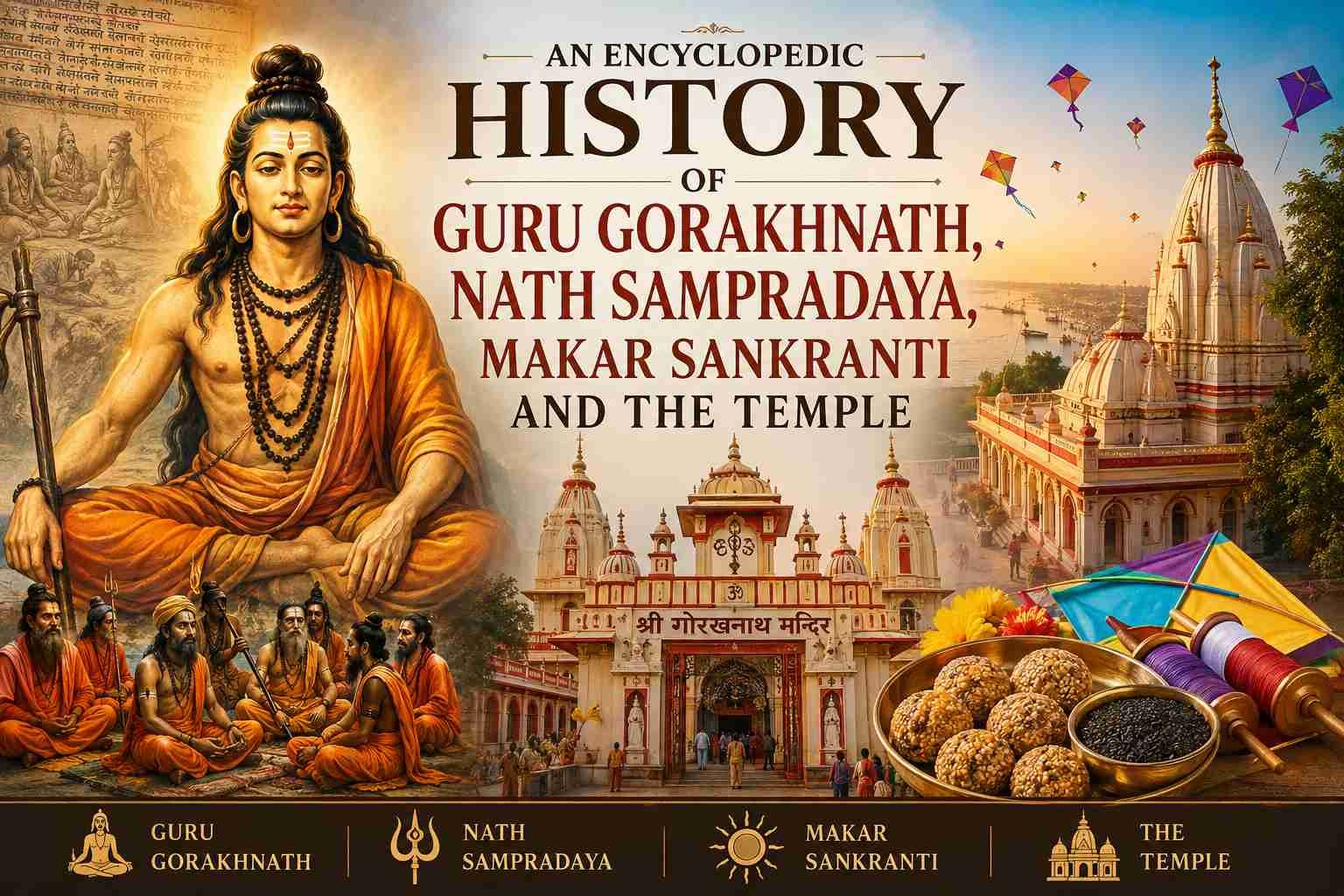
The history of Gorakhnath Mandir Gorakhpur spans thousands of years, tracing its origins from ancient Vedic and Mahabharata traditions to the present day. Built on the sacred soil where Mahayogi Guru Gorakhnath performed deep penance, the shrine has evolved from a humble ascetic hermitage into a monumental spiritual epicenter. Despite enduring destruction during medieval invasions, Gorakhnath Mandir Gorakhpur was persistently restored by devoted followers and kings. Today, the history of Gorakhnath Mandir Gorakhpur stands as a monumental testament to spiritual resilience, cultural preservation, and continuous devotional practice in Sanatan Dharma.
Ancient Roots and Treta Yuga Traditions
According to sacred traditions, the history of Gorakhnath Mandir Gorakhpur dates back to Treta Yuga when Guru Gorakhnath sanctified the area. His austere meditation established a timeless spiritual vortex that attracted seekers for centuries.
Medieval Resistance and Cultural Preservation
Throughout medieval historical disruptions, the sanctuary of Gorakhnath Mandir Gorakhpur faced repeated destruction by foreign rulers. Devout ascetics consistently rebuilt the temple, preserving ancient traditions and maintaining uninterrupted worship across turbulent centuries.
Mahabharata Traditions Linked to Gorakhnath Mandir Gorakhpur
Fascinating connections link the history of Gorakhnath Mandir Gorakhpur with epic Mahabharata traditions. Legend states that during their exile, the Pandava brothers visited this holy spot to seek blessings from Guru Gorakhnath. Strong prince Bhima is believed to have constructed a sacred water tank here, known today as Bhim Sarovar, within the shrine complex. The presence of these epic heroes in local lore highlights how deeply the history of Gorakhnath Mandir Gorakhpur is woven into India’s ancient mythological tapestry, attracting pilgrims seeking blessings associated with epic heroes.
Prince Bhima and Bhim Sarovar Connection
In Mahabharata folklore associated with history of Gorakhnath Mandir Gorakhpur, Prince Bhima spent time serving the great master. He excavated a large water reservoir which remains an integral sacred feature today.
Pandavas’ Pilgrimage in Epic Tradition
Epic traditions record that the Pandavas sought spiritual strength at history of Gorakhnath Mandir Gorakhpur prior to the Kurukshetra war. This historical association elevated the location’s status among royal dynasties.
Guru Gorakhnath and Founding of Gorakhnath Mandir Gorakhpur
Guru Gorakhnath, considered an avatar of Lord Shiva, established the foundation of history of Gorakhnath Mandir Gorakhpur during the 11th century. As the supreme master of Hatha Yoga, he unified disparate spiritual practices into an accessible path of self-realization. By founding his primary seat here, Guru Gorakhnath turned this region into an intellectual and spiritual lighthouse. The history of Gorakhnath Mandir Gorakhpur remains permanently anchored in his revolutionary teachings of inner purity, physical discipline, and social equality, which challenged rigid social structures during medieval times.
Codification of Hatha Yoga Wisdom
Within the history of Gorakhnath Mandir Gorakhpur, Guru Gorakhnath authored pivotal yogic treatises. He systematized pranayama, mudras, and asanas, creating foundational guidebooks for spiritual seekers across successive generations.
Social Equality and Spiritual Inclusion
Guru Gorakhnath redefined medieval spirituality within history of Gorakhnath Mandir Gorakhpur by rejecting caste discrimination. He admitted disciples from all backgrounds, establishing an egalitarian monastic order that continues today.
Nath Sampradaya Seat in History of Gorakhnath Mandir Gorakhpur
The history of Gorakhnath Mandir Gorakhpur is inseparable from the Nath Sampradaya, serving as its supreme international headquarters. The monastic order established a organized lineage of Mahants who oversaw the expansion of yogic philosophy across South Asia. Under their leadership, the temple became a center for Vedic learning, Ayurvedic medicine, and spiritual literature. Through centuries of changing dynasties, the seat at Gorakhnath Mandir Gorakhpur maintained its institutional independence, exercising moral authority and providing guidance to millions of devotees across the Indian subcontinent.
Monastic Governance and Spiritual Lineage
Throughout the history of Gorakhnath Mandir Gorakhpur, an unbroken succession of Mahants preserved core Nath doctrines. Strict monastic discipline ensured the institutional stability and moral authority of the supreme order.
Expansion of Affiliated Spiritual Centers
From the central seat in history of Gorakhnath Mandir Gorakhpur, Nath yogis established sub-centers worldwide. These affiliated branches spread traditional yoga, meditation, and community service while maintaining allegiance to Gorakhpur.
Architectural Evolution in History of Gorakhnath Mandir Gorakhpur
The architectural evolution recorded in the history of Gorakhnath Mandir Gorakhpur showcases classic North Indian Nagara style adapted for monastic life. Originally constructed as simple brick and stone shrines, successive rebuildings transformed the structure into a grand modern complex. Craftsmen utilized fine white marble and red sandstone to erect towering spires, intricate pillars, and sprawling courtyards. The central sanctum in the history of Gorakhnath Mandir Gorakhpur houses a serene marble image of Guru Gorakhnath, blending ancient sacred aesthetic principles with grand structural engineering.
Transformation of Central Sanctum Sanctorum
In the architectural history of Gorakhnath Mandir Gorakhpur, the sanctum evolved from a modest cave-like chamber into an ornate marble shrine housing sacred idols and the famous eternal flame.
Expansion of Courtyards and Structures
Modern additions in the history of Gorakhnath Mandir Gorakhpur introduced spacious marble courtyards, residential quarters, and ceremonial halls designed to comfortably host hundreds of thousands of pilgrims during festivals.
Religious Significance in History of Gorakhnath Mandir Gorakhpur
Throughout history of Gorakhnath Mandir Gorakhpur, the temple has remained a paramount center of faith, divine grace, and spiritual liberation. Devotees believe that worshipping at this consecrated site fulfills earnest desires and alleviates karmic burdens. The continuous burning of the eternal flame, lit since antiquity, symbolizes timeless divine presence. The history of Gorakhnath Mandir Gorakhpur reinforces its status as a sacred pilgrimage center where daily Vedic rituals, sacred chants, and devotional offerings connect millions with deep spiritual traditions.
The Eternal Flame and Spiritual Power
Central to the history of Gorakhnath Mandir Gorakhpur is the Akhand Jyoti, an eternal flame. Devotees revere this sacred light as a source of divine blessings and yogic energy.
Rituals and Continuous Spiritual Practices
The ritual history of Gorakhnath Mandir Gorakhpur features continuous morning and evening Aarti ceremonies. These daily spiritual practices maintain an elevated atmosphere of profound devotion and peaceful contemplation for visitors.
Khichdi Mela Legacy in History of Gorakhnath Mandir Gorakhpur
A glorious chapter in the history of Gorakhnath Mandir Gorakhpur is the tradition of Khichdi Mela during Makar Sankranti. Originating from a mythological event where Guru Gorakhnath received raw grains in his alms bowl, this annual festival draws millions of pilgrims. Attendees queue for miles to offer raw rice, lentils, and jaggery at the main shrine. Over centuries, this event in the history of Gorakhnath Mandir Gorakhpur has expanded into a month-long socio-religious fair celebrating unity, charity, and devotional joy.
Origin of the Sacred Khichdi Offering
The festival history of Gorakhnath Mandir Gorakhpur commemorates Guru Gorakhnath’s miraculous inexhaustible alms bowl. Devotees replicate this event annually by offering raw rice and pulses at his altar.
Socio-Economic Impact of Annual Fair
Within the history of Gorakhnath Mandir Gorakhpur, Khichdi Mela grew into a massive regional fair. It fosters local commerce, cultural exchange, and massive public dining through distribution of sacred Mahaprasad.
Socio-Cultural Contributions in History of Gorakhnath Mandir Gorakhpur
Beyond spiritual worship, the history of Gorakhnath Mandir Gorakhpur reflects a deep commitment to societal development and public welfare. The temple complex established educational institutions, hospitals, and charitable trust funds that serve underprivileged populations. Throughout history of Gorakhnath Mandir Gorakhpur, Mahants have mediated local disputes, promoted social harmony, and led disaster relief efforts during regional crises. This holistic approach to community service demonstrates how traditional spiritual institutions actively drive social progress and uplift regional living standards over centuries.
Educational and Healthcare Foundations Built
Institutions founded in the history of Gorakhnath Mandir Gorakhpur include schools, universities, and hospitals. These initiatives provide modern education and accessible medical treatment alongside traditional value systems to society.
Philanthropic Service and Food Security
The charitable history of Gorakhnath Mandir Gorakhpur highlights continuous free meal distribution. Daily Annakoot programs ensure thousands of pilgrims and underprivileged citizens receive nutritious hot meals without discrimination.
Political Leadership in History of Gorakhnath Mandir Gorakhpur
The leadership recorded in history of Gorakhnath Mandir Gorakhpur has played a major role in shaping regional and national governance. In the modern era, prominent Mahants such as Mahant Digvijay Nath, Mahant Avaidyanath, and Yogi Adityanath actively participated in public administration. The history of Gorakhnath Mandir Gorakhpur demonstrates how monastic leaders bridged spiritual authority with legislative representation, advocating for national integrity, cultural revival, and civic development while maintaining the sanctity and traditions of their ancient monastic order.
Monastic Involvement in Freedom Movement
During the independence movement, the history of Gorakhnath Mandir Gorakhpur records active political leadership. Mahants organized resistance against colonial rule, championing national unity and traditional cultural values.
Modern Governance and Public Service
In recent history of Gorakhnath Mandir Gorakhpur, head priests have served as parliamentarians and Chief Ministers, successfully integrating ethical governance, cultural preservation, and large-scale public administration in India.
Visiting Modern Complex in History of Gorakhnath Mandir Gorakhpur
Understanding the history of Gorakhnath Mandir Gorakhpur enhances the experience of visiting this modern architectural marvel today. Located in Gorakhpur city, Uttar Pradesh, the complex is easily accessible by road, rail, and air. Visitors exploring the history of Gorakhnath Mandir Gorakhpur can admire ancient relics, peaceful water bodies, and vibrant ritual spaces. Visiting during winter, particularly during Makar Sankranti, offers an unforgettable opportunity to witness living historical traditions, vibrant local culture, and deep spiritual devotion firsthand.
Optimal Travel Times and Seasons
To fully appreciate the history of Gorakhnath Mandir Gorakhpur, plan visits between October and March. Pleasant weather allows comfortable exploration of sprawling courtyards, historical shrines, and festive gatherings.
Transportation and Accommodation Options
Reaching the site featured in history of Gorakhnath Mandir Gorakhpur is simple via Gorakhpur Junction railway station. Clean guest houses and modern hotels around the complex accommodate diverse pilgrim needs.
Frequently Asked Questions About History of Gorakhnath Mandir Gorakhpur
1. What is the ancient origin in history of Gorakhnath Mandir Gorakhpur?
The history of Gorakhnath Mandir Gorakhpur traces back to Treta Yuga and Mahabharata traditions. Guru Gorakhnath performed penance here, establishing a sacred site that evolved into a major spiritual hub over many centuries.
2. How is Mahabharata connected to history of Gorakhnath Mandir Gorakhpur?
In Mahabharata traditions linked to history of Gorakhnath Mandir Gorakhpur, the Pandavas visited during exile. Prince Bhima constructed the Bhim Sarovar lake located within the current temple complex grounds.
3. Who founded the order in history of Gorakhnath Mandir Gorakhpur?
Guru Gorakhnath, an 11th-century yogic saint and avatar of Lord Shiva, established the Nath Sampradaya order headquartered at history of Gorakhnath Mandir Gorakhpur to teach Hatha Yoga and spiritual discipline.
4. Did history of Gorakhnath Mandir Gorakhpur suffer medieval invasions?
Yes, during medieval times, the structure featured in history of Gorakhnath Mandir Gorakhpur faced repeated destruction by foreign invaders. Devout followers and kings consistently rebuilt and preserved the sacred shrine.
5. What is the significance of eternal flame in history of Gorakhnath Mandir Gorakhpur?
The Akhand Jyoti in history of Gorakhnath Mandir Gorakhpur is an eternal flame lit since ancient times, symbolizing uninterrupted spiritual energy, divine power, and continuous worship across centuries.
6. How did Khichdi Mela originate in history of Gorakhnath Mandir Gorakhpur?
Khichdi Mela originated from a legend in history of Gorakhnath Mandir Gorakhpur where Guru Gorakhnath held an inexhaustible alms bowl. Today, millions offer raw rice and lentils during Makar Sankranti.
7. What architectural style defines history of Gorakhnath Mandir Gorakhpur?
The complex in history of Gorakhnath Mandir Gorakhpur features North Indian Nagara architecture, built with white marble and red sandstone, featuring tall spires, carved pillars, and vast peaceful courtyards.
8. What social work marks history of Gorakhnath Mandir Gorakhpur?
Throughout history of Gorakhnath Mandir Gorakhpur, the monastery established free kitchens, charitable hospitals, schools, and disaster relief funds, driving regional social development and community welfare continuous over generations.
9. What political role is seen in history of Gorakhnath Mandir Gorakhpur?
Mahants in history of Gorakhnath Mandir Gorakhpur have actively engaged in public life, serving as parliamentarians and Chief Ministers while maintaining monastic leadership and advocating for social progress.
10. How far is site in history of Gorakhnath Mandir Gorakhpur from railway station?
The historic site of Gorakhnath Mandir Gorakhpur is situated roughly 4 kilometers from Gorakhpur Junction railway station, well connected by local taxis, auto-rickshaws, and public transport buses.