
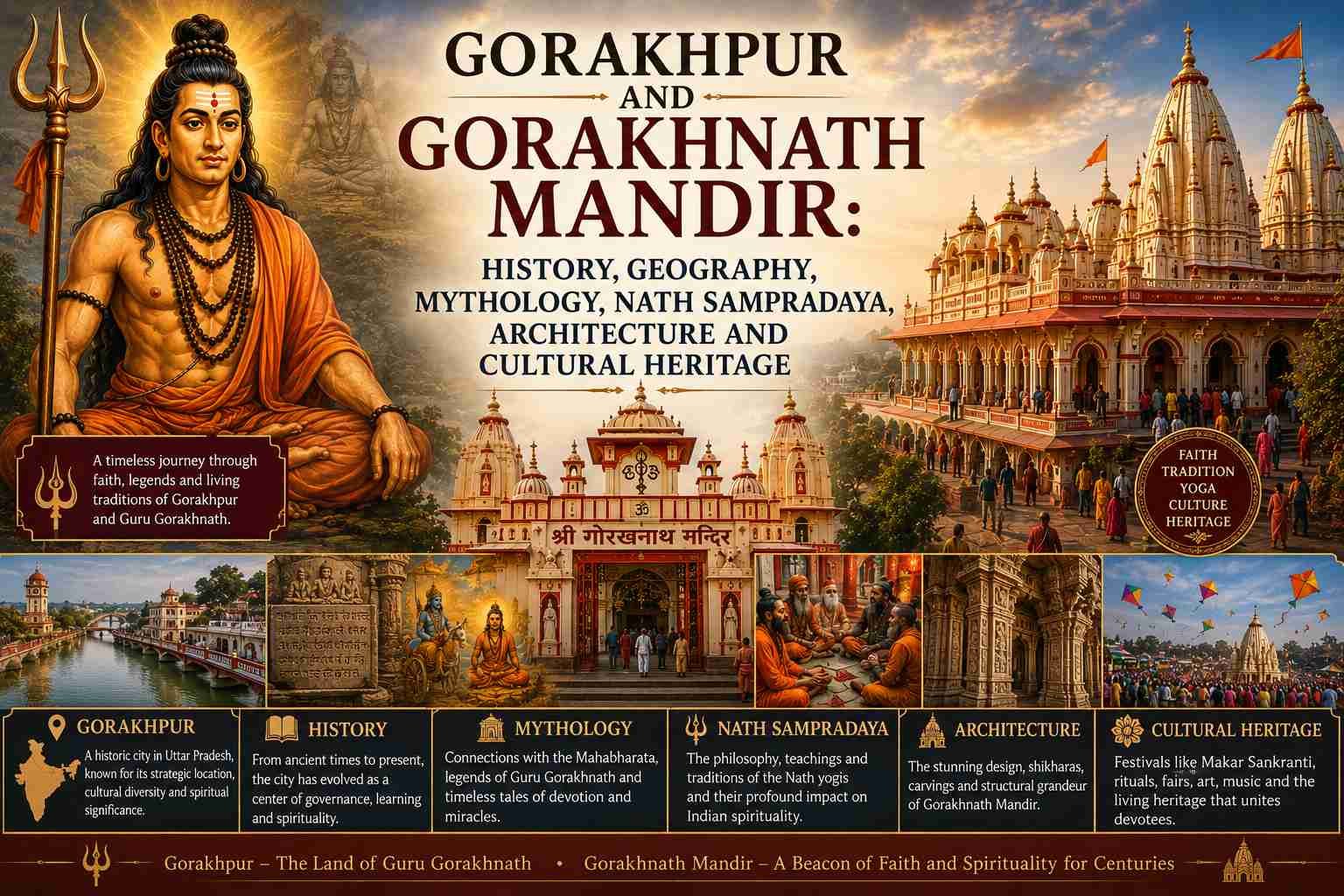
The history of Gorakhnath Mandir in Gorakhpur represents centuries of continuous spiritual tradition, monastic leadership, and cultural perseverance in Northern India. Established upon the sacred land where Mahayogi Guru Gorakhnath performed deep penance, the complex remains an active center of Sanatan Dharma. You can explore more travel guides on our home page or read about its foundational era in our post on Gorakhnath Mandir Gorakhpur historical origins and legacy. Every year, millions of pilgrims travel to Gorakhpur to experience the quiet power, sacred relics, and living heritage preserved within the temple walls.
Ancient Origins of Gorakhnath Mandir
Spiritual texts date the origin of Gorakhnath Mandir to ancient times when Guru Gorakhnath selected this peaceful location for intense meditation. The spiritual energy generated during his austerities converted the surrounding area into an enduring pilgrimage destination.
Historical Endurance Through Ages
Throughout centuries of regional instability, Gorakhnath Mandir survived multiple attacks and structural destruction. Devout disciples and local patrons repeatedly restored the temple, ensuring that its spiritual rituals and sacred flames continued unbroken across generations.
Mythological Tapestry and Epics at Gorakhnath Mandir
Rich mythological lore enhances the identity of Gorakhnath Mandir. Ancient stories link the temple site to Treta Yuga as well as the Mahabharata, recounting how the Pandava brothers visited to seek guidance from Guru Gorakhnath during their exile. For a deeper look into these historical transitions, visit our complete account on the history of Gorakhnath Mandir Gorakhpur from antiquity to modern era. Devotees perform sacred rituals at the temple to seek health, inner balance, and spiritual fulfillment.
The Legend of Bhim Sarovar
According to regional legend, Prince Bhima excavated the sacred water tank known as Bhim Sarovar within the Gorakhnath Mandir complex. Today, pilgrims perform ritual ablutions in this holy lake prior to entering the main sanctum.
The Eternal Flame (Akhand Jyoti)
Inside the main shrine of Gorakhnath Mandir, the Akhand Jyoti burns continuously. Followers revere this sacred flame as an uninterrupted source of spiritual illumination, symbolising the continuous presence of divine yogic power.
Guru Gorakhnath and Hatha Yoga Origins
As the premier disciple of Matsyendranath and an expansion of Lord Shiva, Guru Gorakhnath made Gorakhnath Mandir the primary seat for spreading his teachings. He systematized Hatha Yoga, breath regulation, and meditation techniques into accessible practices for everyday life. By visiting our home page, readers can find additional cultural itineraries across India. Guru Gorakhnath’s legacy at Gorakhnath Mandir emphasizes inner discipline, personal cleanliness, and devotion over rigid social divisions.
Systematizing Hatha Yogic Philosophy
Guru Gorakhnath authored fundamental spiritual texts that structured physical postures, breath control, and inner focus. His teachings formulated a balanced framework that continues to form the bedrock of global yoga practice today.
Equality and Inclusivity in Practice
Guru Gorakhnath welcomed seekers from all societal strata into his order at Gorakhnath Mandir. He proclaimed that spiritual progress is determined solely by personal purity, discipline, and sincerity rather than social standing or birthright.
Nath Sampradaya Monastic Seat
Gorakhnath Mandir serves as the central administrative and spiritual headquarters of the international Nath Sampradaya order. The presiding Mahant resides within the monastery complex, guiding hundreds of branch ashrams spread throughout India and neighboring regions. Learn more about this spiritual movement in our article on Gorakhnath Mandir Gorakhpur historical origins and legacy. The monastic seat preserves ancient philosophy while directing extensive social welfare programs.
Lineage of Monastic Leadership
An unbroken succession of Mahants oversees the daily discipline and spiritual operations of Gorakhnath Mandir. This administrative structure maintains rigorous ethical standards and preserves the authentic practices of the Nath tradition.
Global Reach of the Nath Order
From the headquarters at Gorakhnath Mandir, the Nath Sampradaya coordinates spiritual education, wellness retreats, and humanitarian services worldwide. Branch centers maintain close links with the central seat in Gorakhpur.
Architectural Elements of Gorakhnath Mandir
The architecture of Gorakhnath Mandir combines classical North Indian Nagara design with large functional spaces built to accommodate vast assemblies. Constructed using high-grade white marble and red sandstone, the complex features tall spires, detailed stone carvings, and vast courtyards. For more destination guides and architectural insights, check out our home page. The inner sanctum houses a peaceful marble statue of Guru Gorakhnath depicted in deep meditative contemplation.
Inner Shrine Craftsmanship
The main sanctuary within Gorakhnath Mandir features fine marble work and artistic motifs. Adjacent shrines honor Lord Shiva, Goddess Durga, and historic Nath masters, providing dedicated spaces for reflection.
Expansive Grounds and Courtyards
Gorakhnath Mandir encompasses wide marble-paved courtyards designed to safely hold thousands of devotees during festival seasons. Clean surroundings, shaded arcades, and peaceful gardens offer an ideal environment for quiet prayer.
Religious Customs and Daily Rituals
Devotees view Gorakhnath Mandir as a sacred haven for personal reflection, healing, and spiritual renewal. Daily prayer schedules, collective chanting, and solemn Aarti ceremonies maintain a deeply devotional atmosphere throughout the complex. Discover further details on these traditions in our article regarding the history of Gorakhnath Mandir Gorakhpur from antiquity to modern era. Visiting the temple offers pilgrims a peaceful retreat from daily stress.
Daily Prayer and Aarti Ceremonies
Morning and evening Aarti at Gorakhnath Mandir gather large numbers of worshippers. The harmonious sound of temple bells, incense smoke, and traditional chants creates an atmosphere of reverence and peace.
Pilgrim Blessings and Devotional Practices
Visitors travel from across the country to Gorakhnath Mandir to offer prayers and perform quiet meditation. Many pilgrims report experiencing a deep sense of relief, clarity, and spiritual encouragement during their visit.
Makar Sankranti and the Khichdi Mela
The annual Khichdi Mela held at Gorakhnath Mandir during Makar Sankranti stands among the most significant socio-religious events in Northern India. Millions of pilgrims gather to offer raw rice, lentils, and jaggery at the main alter. Read more about the cultural impact of this festival on our Gorakhnath Mandir Gorakhpur historical origins and legacy post. During this festival, the temple grounds host a month-long fair filled with local commerce, arts, and community gatherings.
Sacred Food Offerings
Pilgrims bring offerings of uncooked grains to Gorakhnath Mandir during Makar Sankranti. The collected grains are prepared into sanctified Mahaprasad and served free to thousands of visitors every day.
Community Celebration and Fair
Throughout the Khichdi Mela, the expansive grounds around Gorakhnath Mandir host local craftsmen, cultural performers, and food vendors. The event brings together diverse communities in a spirit of shared celebration and culture.
Social, Educational, and Charitable Works
Beyond its function as a house of worship, Gorakhnath Mandir functions as a center for regional social services and public welfare. The monastery runs primary schools, higher educational institutes, hospitals, and community assistance initiatives across Eastern Uttar Pradesh. Explore more cultural destinations on our home page. The philanthropic efforts directed by Gorakhnath Mandir demonstrate how traditional spiritual centers actively support local development.
Educational Advancement
Gorakhnath Mandir oversees academic schools, degree colleges, and technical institutions. These organizations provide accessible, quality education combined with moral values, helping young students build productive futures.
Healthcare and Disaster Relief
Charitable medical centers and free health camps operated by Gorakhnath Mandir deliver essential medical services to local populations. The temple also manages free kitchens that provide nutritious meals to pilgrims and underprivileged individuals.
Public Leadership and Civic Influence
The leadership of Gorakhnath Mandir has maintained a notable role in public life and civic leadership in India. Several Mahants from the monastery have served in public office, linking spiritual principles with civic responsibility. Read more about this aspect in our feature on the history of Gorakhnath Mandir Gorakhpur from antiquity to modern era. The temple continues to serve as an important venue for constructive social dialogue.
Integrity in Leadership
Mahants of Gorakhnath Mandir have consistently advocated for social reform, educational access, and regional progress. Their work balances monastic duties with active dedication to the public good.
Community Dialogues
Gorakhnath Mandir provides a welcoming space where civic leaders, scholars, and citizens meet to discuss social initiatives. These gatherings promote unity, civic responsibility, and local cooperation.
Visitor Guide for Gorakhnath Mandir
Organizing a visit to Gorakhnath Mandir is convenient due to its central setting in Gorakhpur. Connected by air, rail, and road, the complex offers clean amenities, organized queuing, and nearby lodging options. Visit our home page for further travel resources. The winter months offer pleasant weather for exploring the temple grounds, nearby lakes, and local markets.
Optimal Visiting Months
The best period to plan a trip to Gorakhnath Mandir is between October and March. Mild winter weather makes walking around the complex comfortable and coincides with the famous Khichdi Mela event in January.
Transportation and Local Facilities
Situated approximately 4 kilometers from Gorakhpur Junction railway station, Gorakhnath Mandir is easily reached by local taxis, auto-rickshaws, and buses. Diverse guest houses and budget accommodations are available nearby.
Frequently Asked Questions About Gorakhnath Mandir
1. What is the spiritual significance of Gorakhnath Mandir?
Gorakhnath Mandir is the primary seat of the Nath Sampradaya, dedicated to Guru Gorakhnath. It serves as an international center for yoga, spiritual study, social service, and cultural preservation.
2. Who was Guru Gorakhnath?
Guru Gorakhnath was an influential yogic master who codified Hatha Yoga practices. Revered as a divine figure, he established the Nath monastic order headquartered at Gorakhnath Mandir.
3. Why is Khichdi offered during Makar Sankranti at Gorakhnath Mandir?
Offering raw rice and lentils honors the tradition where Guru Gorakhnath received raw food grains in his bowl. Millions offer these ingredients during the annual Khichdi Mela festival.
4. How far is Gorakhnath Mandir from the main railway station?
Gorakhnath Mandir is located roughly 4 kilometers from Gorakhpur Junction railway station, making it quick and easy to reach via local transport options like auto-rickshaws and taxis.
5. What are the daily operating hours for Gorakhnath Mandir?
Gorakhnath Mandir opens daily from 4:00 AM to 10:00 PM. Visitors can attend morning and evening Aarti ceremonies held inside the main sanctum.
6. What architectural style is displayed at Gorakhnath Mandir?
Gorakhnath Mandir is constructed in the traditional North Indian Nagara style, featuring marble interiors, red sandstone elements, detailed carvings, and wide open courtyards.
7. Are there place to stay near Gorakhnath Mandir?
Yes, the temple offers clean guest houses and Dharamshalas within its premises. Additionally, numerous hotels and private lodges are located around the immediate area.
8. What social services are managed by Gorakhnath Mandir?
Gorakhnath Mandir manages educational schools, technical colleges, hospitals, and free meal kitchens, while actively supporting community welfare programs across Uttar Pradesh.
9. Who is the current Mahant of Gorakhnath Mandir?
The current Mahant of Gorakhnath Mandir is Yogi Adityanath, who oversees the monastic tradition while serving as the Chief Minister of Uttar Pradesh.
10. Is there an entry fee to visit Gorakhnath Mandir?
No, entry into Gorakhnath Mandir is completely free for all pilgrims and tourists regardless of background, welcoming everyone to explore its sacred grounds peacefully.